Showing posts with label Literary Fiction. Show all posts

Wednesday, 11 October 2017

Book Review: How to Stop Time by Matt Haig


The Blurb

'I am old. That is the first thing to tell you. The thing you are least likely to believe. If you saw me you would probably think I was about forty, but you would be very wrong.'

Tom Hazard has a dangerous secret. He may look like an ordinary 41-year-old, but owing to a rare condition, he's been alive for centuries. From Elizabethan England to Jazz-Age Paris, from New York to the South Seas, Tom has seen a lot, and now craves an ordinary life.

Always changing his identity to stay alive, Tom has the perfect cover - working as a history teacher at a London comprehensive. Here he can teach the kids about wars and witch hunts as if he'd never witnessed them first-hand. He can try to tame the past that is fast catching up with him. The only thing Tom must not do is fall in love.

How to Stop Time is a wild and bittersweet story about losing and finding yourself, about the certainty of change and about the lifetimes it can take to really learn how to live.

My Review

Thank you to Netgalley and the publisher, Canongate Books for the ARC. How to Stop Time was published in July 2017, and I apologise for being so late with my review.

I have heard this book is being made into a film, with Benedict Cumberbatch in the lead role. He's going to be brilliant as Tom Hazard.

When I read this, I saw David Tennant as Tom - well, to be more accurate, Tennant's Doctor Who. Without the timelordy stuff, like travelling backwards and forwards. Poor Tom can only go forwards, in real time, which must make his life a real drag over the past nine and a half centuries, and at the heart of it, is him never getting over the loss of his love.

The narrative is interspersed with the here and now, and flashes back to earlier times. This could make the story slow down, but it doesn't - the pace is timely and constant.

I love the time Tom spends as a teacher, telling the kids stories  - not from history books but from his own perspective. How amazing would it be to hear of Shakespeare first hand? The depth of writing, the life Haig brings to the pages immersed me into Tom's world. 
  
This is a beautiful story.

About the Author

Matt Haig is a British author for children and adults. His memoir Reasons to Stay Alive was a number one bestseller, staying in the British top ten for 46 weeks. His children's book A Boy Called Christmas was a runaway hit and is translated in over 25 languages. It is being made into a film by Studio Canal and The Guardian called it an 'instant classic'. His novels for adults include the award-winning The Radleys and The Humans.

He won the TV Book Club 'book of the series', and has been shortlisted for a Specsavers National Book Award. The Humans was chosen as a World Book Night title. His children's novels have won the Smarties Gold Medal, the Blue Peter Book of the Year, been shortlisted for the Waterstones Children's Book Prize and nominated for the Carnegie Medal three times. 

His books have received praise from Neil Gaiman, Stephen Fry, Jeanette Winterson, Joanne Harris, Patrick Ness, Ian Rankin and SJ Watson, among others. The Guardian summed up his writing as 'funny, clever and quite, quite lovely' by The Times and the New York Times called him 'a writer of great talent'.

Sunday, 17 September 2017

Blog Tour: Maria in the Moon by Louise Beech


I'm delighted to be on the blog tour for Maria in the Moon, by Louise Beech, author of The Mountain in My Shoe. This new novel will be published by Orenda on September 30th, and you can buy it here

Thank you to the author and publisher for the advanced reading copy. This review is my unbiased opinion.

The Blurb

'Long ago my beloved Nanny Eve chose my name. Then one day she stopped calling me it. I try now to remember why, but I just can't.' 

Thirty-one-year-old Catherine Hope has a great memory. But she can't remember everything. She can't remember her ninth year. She can't remember when her insomnia started. And she can't remember why everyone stopped calling her Catherine-Maria. With a promiscuous past, and licking her wounds after a painful breakup, Catherine wonders why she resists anything approaching real love. But when she loses her home to the deluge of 2007 and volunteers at Flood Crisis, a devastating memory emerges ... and changes everything. Dark, poignant and deeply moving, Maria in the Moon is an examination of the nature of memory and truth, and the defences we build to protect ourselves, when we can no longer hide... 

My Review

I didn't find Catherine an easy character to like at first. She's abrasive, prickly and doesn't make friends easily. As a reader, I felt I, like character in the book, as if I was being held at arm's length. But as I got to know Catherine, the more I began to understand her.

She has an uneasy relationship with her family; her mother and father are both dead and she is left with a step-mother who, Catherine believes, only puts up with her out of a sense of duty to Catherine's late father. Mother's partner, Graham, is lovely, though his daughter is not quite as friendly. The one constant ally in her life is aunt 'Hairy' Mary.

Catherine's house is still being repaired after flood damage and she splits her time between working in a care home and volunteering. She starts volunteering for a flood helpline, and we learn how being a victim of flood damage can have a serious emotional impact on people as well as the loss of home and belongings. As a volunteer, she adopts a different name, and she is also told not to get attached to the callers, but she finds it impossible to disassociate herself from them. Catherine is not good at following rules.

No one can get to know the real Catherine, with her hiding behind these other names. She's not even sure herself who she is, as her memories of the year she turned nine have disappeared. Gradually these memories are coming back to her. She knows she needs to remember, but she is scared too.

I found the pace of the book quite slow, and a little hard to get into to start with, but as I got to know Catherine and her memories started to come back, I became more involved in her journey. It's dark and murky and by half-way, I was utterly submerged. 

About the Author

Louise Beech remembers sitting in her father's cross-legged lap while he tried to show her his guitar's chords. He's a musician. Her small fingers stumbled and gave up. She was three. His music sheets fascinated her - such strange language that translated into music. Her mother teaches languages, French and English, so her fluency with words fired Louise's interest. She knew from being small that she wanted to write, to create, to make magic.

She loves all forms of writing. Her short stories have won the Glass Woman Prize, the Eric Hoffer Award for Prose, and the Aesthetica Creative Works competition, as well as shortlisting twice for the Bridport Prize and being published in a variety of UK magazines. Her first play, Afloat, was performed at Hull Truck Theatre in 2012. She also wrote a ten-year newspaper column for the Hull Daily Mail about being a parent, garnering love/hate criticism. Her debut novel was a Guardian Readers' pick for 2015. 

She is inspired by life, history, survival and love, and always has a story in her head. Her debut novel, How to be Brave, came from truth - when Louise's daughter got Type 1 Diabetes she helped her cope by sharing her grandad's real life sea survival story. Her second novel, The Mountain in my Shoe, was be released in September 2016 and was inspired by her time working with children in the care system.

When she was fifteen Louise bet her mother ten pounds she'd be published by the time she was thirty. She missed this self-set deadline by two months. Her mother is still waiting for the money.

Link to website - http://louisebeech.co.uk/
Follow Louise on Twitter: @LouiseWriter

Thursday, 7 September 2017

Book Review: The Break by Marian Keyes

The Blurb
Amy's husband Hugh has run away to 'find himself'. But will he ever come back?
'Myself and Hugh . . . We're taking a break.'
'A city-with-fancy-food sort of break?'
If only.
Amy's husband Hugh says he isn't leaving her.
He still loves her, he's just taking a break - from their marriage, their children and, most of all, from their life together. Six months to lose himself in South East Asia. And there is nothing Amy can say or do about it.
Yes, it's a mid-life crisis, but let's be clear: a break isn't a break up - yet . . .
However, for Amy it's enough to send her - along with her extended family of gossips, misfits and troublemakers - teetering over the edge.
For a lot can happen in six-months. When Hugh returns, if he returns, will he be the same man she married? Will Amy be the same woman?
Because if Hugh is on a break from their marriage, then so is she . . .
The Break is a story about the choices we make and how those choices help to make us. It is Marian Keyes at her funniest, wisest and brilliant best.
My Review

How was excited was I to receive an ARC via Netgalley and the publisher, Penguin, for Marian's latest book? Oh, very!

I love Marian's books, and this one does not disappoint. The Queen of Women's Fiction is Back!

Poor Amy, abandoned by her husband, Hugh, who wants to go off and 'find himself' in Thailand. When he says he wants a break, he means a total break from the marriage; he wants carte blanche to sleep with other women and forget he has a wife back home.

Amy doesn't get any choice in the matter. Everyone around her tuts and frets about his betrayal, some jumping joyfully on the gossip wagon with a sense of schadenfreude, others telling her what she should and shouldn't be feeling.

Marian writes with a sparkly warmth and wit, lending depth to her characters. I was drawn in straight away into this tale of family, guilt and uncertainty. Amy struggles to accept her husband's decision, as I think anyone would. There was no real sign beforehand that their marriage was in trouble... or was there? Hugh had been depressed after losing two people close to him, but everyone is still shocked. Amy veers between anger at Hugh and guilt at her own behaviour. 

Then there's the other characters in Amy's chaotic life, spiky daughter Neeve, from her first marriage to footballer Richie, 16 year old Kiara, Amy's daughter with Hugh, and the delicate Sofie, their niece. They all struggle with the fall-out from Hugh's departure. 

Amy has struggles all too common in real life, realising that supporting your friends isn't always a two-way street. Sister Derry wouldn't know commitment if it slapped her round the face, friend Steevie is a man-hater, and Posh Petra has enough on her plate with The Kid from Hell. They, and others, are all glorious characters who are wholly believable.

It's a poignant story, dealing with some serious issues such as abortion in Ireland, injected with Marian's usual sharp humour. Amy's Mam's new-found fame is hilarious, adding some lighthearted relief. The pace is gentle, which works perfectly. I still didn't want to put the book down, yet I didn't want it to end.

Another great read from Marian Keyes. 

You can buy The Break here.

About the Author

Marian Keyes' international bestselling novels include Rachel's Holiday, Last Chance Saloon, Sushi for Beginners, Angels, The Other Side of the Story, Anybody Out There, This Charming Man and The Woman Who Stole My Life. Three collections of her journalism, Under the Duvet, Further Under the Duvet and Making It Up as I Go Along, are also available from Penguin. Marian lives in Dublin with her husband.

Follow Marian on Twitter - she is hilarious!

Friday, 18 August 2017

Book Review: The People at Number Nine by Felicity Everett


The Blurb
Meet the new neighbours. Whose side are you on?
Have you met the People at Number 9?
Sara and Neil have new neighbours in their street. Glamorous and chaotic, Gav and Lou make Sara’s life seem dull. As the two couples become friends, sharing suppers, red wine and childcare, it seems a perfect couples-match. But the more Sara sees of Gav and Lou, the more she longs to change her own life. But those changes will come at a price.

My Review

Thank you to the publisher, HQ, for the review copy.

Sex, lust, envy, secrets and lies - this book has it all. 

Go on, admit it. When someone new moves in close by, you're curious, aren't you? What kind of people are they? Are they my kind of people? Am I their kind of people? Do I want to be their kind of people...?

It's quite possible we've encountered people like Gav and Lou ourselves. Families who seem perfect on the outside; but at odds with society, slightly bohemian in the way they don't give a fig about how they should behave. You might envy them, like Sara and Neil.

Sara is bored with life in the suburbs, then excited beyond belief when she befriends her new neighbours, eschewing regular friendships in favour of wanting to be their new best friend. Even husband Neil finds himself drawn into their lives.

It's a satirical look at society, marriage and friendships going askew. I found it hard to find much sympathy with any of the characters, apart from perhaps the long-suffering children. Sara is shallow and sycophantic; Lou and Gav love themselves far too much and even Neil grates after a while. As for being on anyone's 'side' - I disliked them all! 

Why would Lou and Gav be so anxious to be friends with Sara and Neil? They're wittier, more attractive (apparently) than them, so is it some kind of power play? It certainly seems that way.

This book got under my skin, in a rather uncomfortable way as opposed to winning me over. There's not much in the way of redemption. It's more of a snapshot, like a peeping Tom, peering through the window at suburban life. I can't say I particularly enjoyed the book, it was more of a tawdry compulsion.

You can buy The People at Number Nine here

Book review: Spaceman of Bohemia by Jaroslav Kalfar

The Blurb

Set in the near-distant future, Spaceman follows a Czech astronaut as he launches into space to investigate a mysterious dust cloud covering Venus, a suicide mission sponsored by a proud nation. Suddenly a world celebrity, Jakub's marriage starts to fail as the weeks go by, and his sanity comes into question. After his mission is derailed he must make a violent decision that will force him to come to terms with his family's dark political past.
An extraordinary vision of the endless human capacity to persist-and risk everything-in the name of love and home, by a startlingly talented young debut novelist.

My Review

Thank you to Netgalley and the publisher, Sceptre, for the ARC, in exchange for an honest review.

Wow, this really is an extraordinary book. If you enjoyed reading The Martian, then this will blow your space boots off! Life affirming, amazing, what it's like to be human, thought provoking.

Not as technical as The Martian, it is a surprisingly easy read for a book which is so philosophical and steeped in history and politics. Don't let that all put you off - seriously, I can't be doing with books which are too serious usually, but this is awesome. 

It's a magical story of one man, sent into space, with no one but his own mind for company. Until Hanus comes along, that is. Hanus challenges Jakub to reconsider his own existence, and to come to terms with the truth about his father's political past. It's thought-provoking, and shows what it means to be human. I found it life affirming.

It's also a very descriptive book, and the author takes us around the darker side of the city of Prague (yes I know it's supposed to be in space, but that's just part of the story!). 

I found this book to be an absolute gem, and I am so pleased to have read it. I've read some cracking books this year, but this has got to be one of the best.

You can buy Spaceman of Bohemia here.

Monday, 20 March 2017

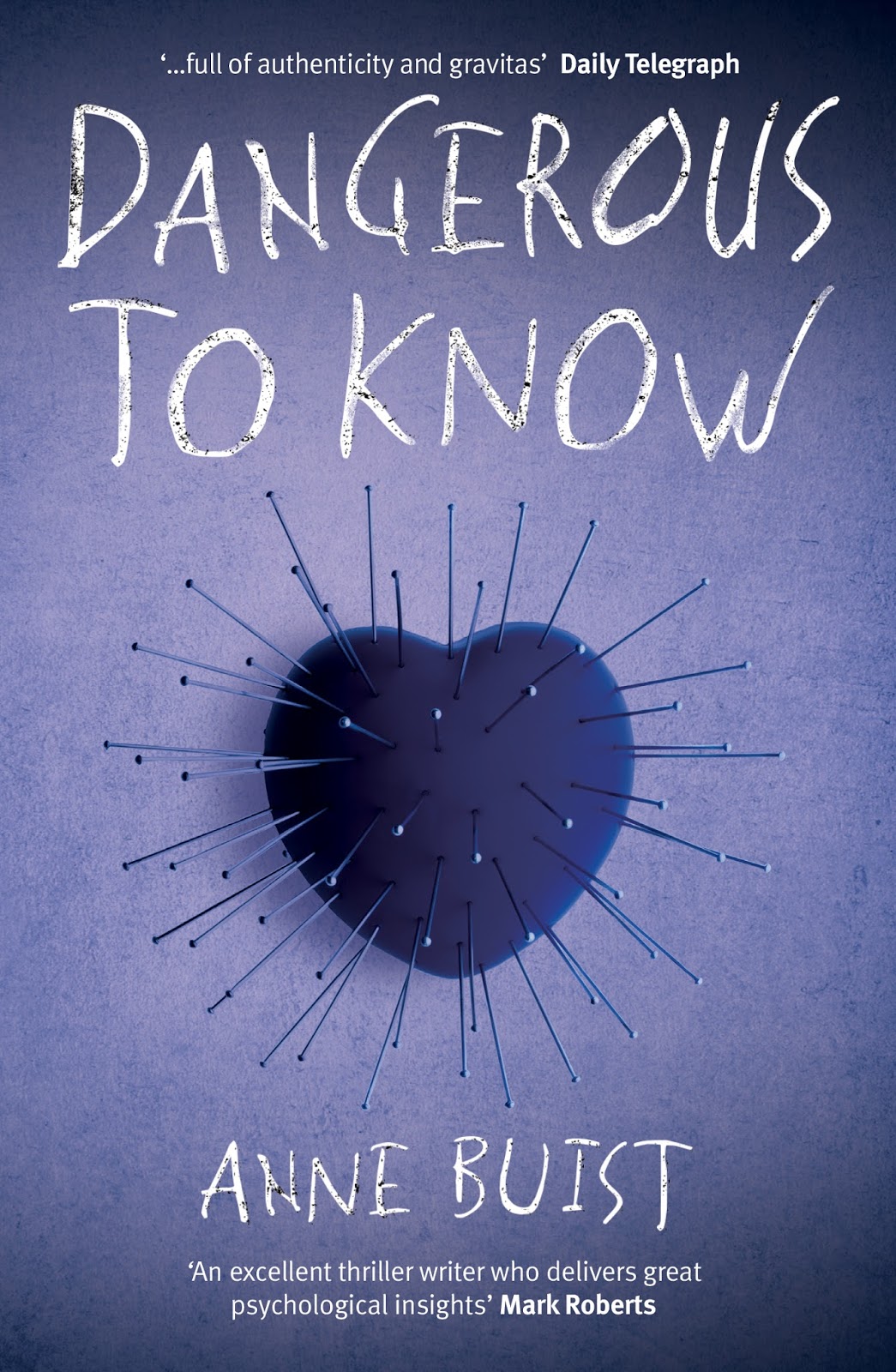
Blog Tour and Review: Dangerous to Know by Anne Buist


Today the Blog Tour for Anne Buist's novel, Dangerous to Know, stops off at mine.

Thanks to Legend Press and Anne Buist for the advanced reading copy. All views are my own.

The Blurb 
Natalie King is back: back from a stay on the psych ward. Her reluctance to live a quiet life has contributed to a severe depressive episode, and now it’s time for a retreat to the country. A borrowed house on the Great Ocean Road; a low-key research job at a provincial university nearby.
But Natalie and trouble have a strange mutual fascination. Her charismatic new boss Frank is friendly, even attractive. But it turns out his pregnant wife is an old enemy of Natalie’s. And when Frank’s tragic personal history is revealed—then reprised in the most shocking way—Natalie finds herself drawn deep into a mystery. And even deeper into danger.
My Review

This is our second encounter with psychologist Natalie King (you can read my review of the first book in the series, Medea's Curse, here). 

Natalie has her bi-polar in hand (for now) after a stay on a psychiatric ward, but she treads a dangerous path when she ends up working for Frank Moreton. Frank is an enigmatic, attractive man, who has the somewhat unfortunate misfortune of losing pregnant wives. He and Natalie are both drawn to each other, but not in the usual way.

Jealousy weaves its way through the story, as wives, ex-lovers and members of an eccentric family all make their presence known. No one appears to be straightforward, everyone has their own hidden agenda, with the exception of the lovely Declan, Natalie's own therapist. I feel sorry for him, and it is obvious that Natalie respects him and wants to please him.

I found this second novel easier to read than the first as there were not as many technical details relating to the mental health profession - as promised by the author!

The plot twists and turns, as family secrets are revealed in this fast-paced thriller. It is a breathless ride along with Natalie as she is at risk of losing control of herself and the complicated situations in which she inevitably ends up embroiled. Natalie is one of the most interesting and complex characters I've ever met in a book, and I hope to be reading about more of her escapades.

About the Author:
Anne Buist is the Chair of Women’s Mental Health at the University of Melbourne and has over 25 years clinical and research experience in perinatal psychiatry working on cases of abuse, kidnapping, infanticide and murder.

She has published ten erotic romance- suspense novels under the pseudonym Simone Sinna. She is married to novelist Graeme Simsion and has two children.

Follow Anne on Twitter: @anneebuist

You can buy Dangerous to Know here (other retailers are available!).

Wednesday, 31 August 2016

Book Review: The Art Teacher by Paul Read


The Blurb: 
Patrick Owen managed seven years at Highfields Secondary School without punching a pupil in the face.
Unknowingly drawn into a war against his own pupils, Patrick's patience finally snaps as he finds himself the number one target with the boy the school just can't seem to expel.
When one of his Art students needs his help, she unwittingly pulls Patrick further into the line of fire, altering their lives forever.
With the media circling and rumours of his involvement reaching new highs, Patrick must escape the world he lives in, or face the consequences.
My Review:

Thank you to Legend Press for the advanced copy of this unbelievably good book.

Poor Patrick. Things are pretty crappy for him - and they are about to get a whole lot worse.

Once a semi-successful rock-star, Patrick is now an Art teacher at rough inner city school and lives on his own in a flat nearby. The kids are fearsome, the teachers weak, and Patrick feels helpless as he gets no support from his peers. It's a place full of people who lack respect for anyone.

It's a frightening but highly compelling read - I read it in two sessions, terrified at what was surely going to happen. The fear of walking alone in the dark in a dodgy area is brought to life on the pages, causing your heartbeat to increase and sweat to appear on your brow as if you were there under threat yourself.

The menace of the gang culture, of the lack of authority - it's all there in bucket-loads of visceral prose, so well written it's hard to believe this is Paul Read's debut. It's an intelligent thriller, a work of literary fiction but not to the exclusion of people like me!

Marks out of 5: 5. Well done, Paul. Keep up the good work!

You can buy The Art Teacher here (other retailers are available).

The Author:

After gaining a first in Fine Art at the Kent Institute of Art and Design at Canterbury, Paul Read moved to London, finding employment at Foyles bookshop before becoming a teacher. He has worked in several inner-city schools as an Art, English and supply teacher, both in England and Italy. He received a distinction from City University London for his creative writing MA.

A few years ago, Paul was involved in a hit-and-run incident which put him in a wheelchair for several months and was where he wrote the first draft of The Art Teacher. He lives with Patricia and their two children.

Follow him on Twitter: @paulreadauthor

Friday, 15 July 2016

Owl Song at Dawn - Author Q&A


I'm proud to be on the Blog Tour for Owl Song at Dawn today, with a Q&A with author Emma Claire Sweeney. You can read my review of the novel here.

Emma Claire Sweeney has won Arts Council, Royal Literary Fund and Escalator Awards, and has been shortlisted for several others, including the Asham, Wasafiri and Fish.

She teaches creative writing at New York University in London; co-runs SomethingRhymed.com – a website on female literary friendship; and publishes features and pieces on disability for the likes of the Guardian, the Independent on Sunday and The Times.

Owl Song at Dawn is inspired by her sister, who has autism.

V: Hi Emma, welcome to my blog, and thank you for the opportunity to ask you questions about your fabulous new book, Owl Song at Dawn.
I've read that you were inspired to write this book by your sister, who has cerebral palsy, and also your Grandma, who provides the inspiration for the main character, Maeve. The story of Maeve's life, dominated by her family's determination to care for her 'severely subnormal' twin sister is heartbreaking. Though the quality of the way the authorities care for people like Edie has, one would hope, changed for the better, in what way is Maeve's life similar to your own in caring for your sister?

E: The positive aspects of the relationship between Maeve and Edie are quite similar to those shared by my sister and me. Lou has an amazing capacity for happiness, which rubs off on other people. Just the other night, after the northern launch party for Owl Song at Dawn, Lou persuaded three of my friends, my parents and me to parade around the living room in a human choo-choo train. Her lack of inhibitions gives the rest of us a great excuse to shed our reserve too.
Some aspects of care tend to get over-emphasised in narratives of disability. I’m thinking particularly of toileting. Most people who support someone with disabilities don’t feel defined by this aspect of their role, nor do they see it as a demeaning part of their loved one’s life. In my novel, I have tried to show that these aspects of care are simply a small part of a much richer and more complex relationship, which involves listening with the heart.
One of the things that I have learnt from Lou is that there can be dignity and kindness for all of us in seeking and accepting care.
 V: Do you think society has changed that much from when your book is set (in the first half of the 20th Century) in the way able-bodied people look at those with disabilities? How would you like to see it change, and do you think it ever will?
E: Maeve and Edie were born in 1933, the year Hitler became Chancellor of Germany. Before long, the Nazis had begun trialling methods of mass murder on people with disabilities. These deaths have never been adequately commemorated. What’s more, Britain played a role in this shameful history since the Nazis were inspired in part by some of the eugenicist ideology prevalent in the UK. When a forced sterilisation bill was debated in parliament in 1931, it was successfully opposed only in favour of incarcerating people with learning disabilities in asylums. One of those who spoke out against forced sterilisation, nonetheless described people with learning disabilities as having “infantile and puerile minds, with perversions, with anti-social tendencies”.

On many levels we have clearly come a very long way since then. People like my sister can grow up in loving families, surrounded by supportive friends. People with learning disabilities and autism have achieved high-profile positions as actors, for instance, and as social activists. Couples with learning disabilities have married and some have raised children of their own.

Yet, these are the exceptions. Even now, learning disability is under and misrepresented in the media. Most people with such disabilities still face great opposition from family and state if they try to forge romantic and sexual relationships. Young people with disabilities are three to four times more likely to be sexually abused than their non-disabled peers and disability hate crime rose last year by 41%. Only 6.6% of adults with learning disabilities have any kind of paid employment. These are troubling indicators that we have yet to learn the lessons of the past.

Even on the more benign end of the spectrum, our attitudes to learning disability can be damaging. When I mention my sister’s cerebral palsy and autism, I am usually offered sympathy on the assumption that her life must be miserable and my childhood must have been tough. This is hardly surprising given that as recently as 1983, when Lou was diagnosed, the doctor told my parents to focus their love on her twin, Sarah, and on their eldest daughter, me; put Lou in an institution; forget there had ever been three.

Sarah and I are both profoundly grateful that our parents ignored the doctor, daring instead to share their love and attention between all three of their girls. Far from a miserable existence, Lou has a compelling joie de vivre that defies preconceptions about disability, and even calls the term itself into question.

V: Maeve comes across as a very strong character, but her life doesn't seem to have moved forward for years, including the denial of her own chance to have a family. Was she punishing herself through guilt at being able-bodied, or guilt regarding the incident in the bath?
E: Good question! If the lives of the twins had panned out differently, I suspect Maeve would have come to terms with her guilt at being born the non-disabled twin. Her situation taught her that life is unfair, so she would have learnt to accommodate this knowledge. It’s her feelings of guilt at her brief yet devastating neglect of Edie that really cause her life to stall. I wanted the novel to speak of how a life may be damaged and restricted by forgivable mistakes and wrong beliefs – a few moments of inattention, a poor choice of boyfriend, a misperception of the reasons why he deserted her, an excessive self-blame.

V: Have any other writers influenced you? Is there one you'd consider to be a mentor? 
E: Two writers in particular spring to mind: one a mentor and the other a peer. 

Jill Dawson taught me at UEA well over a decade ago, and I’ve considered her a mentor ever since. She played a hand in pretty much every positive development of my early writing life. Nowadays, Jill runs Gold Dust mentoring scheme, so lots of emerging writers get to benefit from her refreshing combination of warm encouragement and tough straight-talking. But, more than anything, it was Jill’s writing itself that influenced me. I’ve always admired the way she writes technically ambitious novels about complex subjects, and yet does so with a deceptive lightness of touch. Wild Boy was a particular influence because it is also a novel that questions stereotypes of disability. Set in eighteenth-century France, the novel is inspired by the real-life story of the wild boy of Aveyron. Through the portrayal of both this child, Victor, and Doctor Itard, who attempted to educate him, Jill Dawson explores the varied faces of autism with nuance and insight.

The ethos of Jill Dawson and Michèle Roberts, who both taught me at UEA, centered around collaboration. As a result, I have a fantastically supportive circle of writer friends. One of these friendships actually has its roots in pre-UEA days. Emily Midorikawa and I met during our early twenties, when we were living in rural Japan, working as English teachers by day and scribbling stories in secret by night. Back then, we were so shy about our ambitions that we could not even speak of them to each other.

After almost a year of friendship, over plates of Japanese pasta in a garlic-themed restaurant within a small-town shopping mall, we finally ‘came out’ to each other as aspiring authors. In the decade-and-a-half since then, we have shared every one of the uphill struggles and celebratory moments of each other’s creative journeys: offering encouragement, critiquing work-in-progress, sharing news of publication opportunities, being there to empathise when the going got tough.

Our own experiences as writer friends prompted our interest in the female alliances of our favourite authors of the past. We set up a website, Something Rhymed, on which we post our findings and now we are writing about the subject in greater depth. It is a particular pleasure that my next book, A Secret Sisterhood: the hidden literary friendships of Jane Austen, Charlotte Brontë. George Eliot and Virginia Woolf, will have both mine and Emily’s names on the cover. 

V: How hard did you find writing Owl Song at Dawn, with it being linked to your own circumstances?
E: There were certain areas that I couldn’t let my imagination inhabit: sexual or physical abuse, for instance. It was just too painful for me to bring to life such a scenario. However, I came to feel that there were perhaps some benefits to my reluctance to write about this subject. Sometimes a novel’s depiction of abuse in asylums can overshadow the primary trauma of incarceration itself. 

I discovered that even at the height of institutionalization from the 1930s-1950s, only one-third of people with learning disabilities were ever sent away. This sparked my interest in the two-thirds who tried to remain together as families, and the pressures that might have been brought to bear on them. Such matters were difficult but therapeutic to write about because I was rehearsing various scenarios about my own future with Lou – some of which I hope might come to pass and others that represent my deepest fears.

V: You describe the setting for the book, Morecombe, very fondly. Have you lived there, or do you have fond memories of it as a seaside resort?
E: My story began to emerge when I could hear the voices of my main characters: twin sisters born in 1933. Maeve is fêted as the cleverest girl in town and Edie is diagnosed as ‘severely subnormal’. But they both spoke with Morecambe dialects. This posed a problem because I had never set foot in the town. 

Since I hail from Birkenhead, I tried to relocate my novel to the Wirral’s coastline. But, try as I might, Maeve and Edie refused to morph their Lancashire dialects into Scouse.

At this point, I accepted that I’d simply have to put in the hours, investigating Morecambe’s history from 1933 to the present day. No more excuses: I’d simply have to get it right.

I had been drafting and redrafting for some time before the reasons behind my fascination with the town finally dawned.

My sister had spent a few years at Beaumont College in Lancaster – a college for people with cerebral palsy and associated disabilities – and they used to take trips to the seaside. On some subconscious level, Morecambe is a town that I associate with my sister and her disabilities: a welcoming place where she experienced the happiest of times.

V: I love the way the book is told through Maeve, as if she is telling it to her sister. With the switching between telling their story in the past, and the present day, did you plan the majority of the story out or did you find yourself developing the story and characters as it went along?
E: I’m so glad that you liked this aspect of the novel because I really wrangled with the structure. I always knew that I wanted to piece together a patchwork narrative because I feel that our minds are made up of fragments of memories, reflections, visceral experiences and the voices of others that we’ve internalised. I did plan the story out first, but, as I wrote, the characters’ lives evolved and I had to change the plan radically with each of the novel’s many redrafts.

V: Are you writing a new book now?
E: I am in the midst of writing A Secret Sisterhood: the hidden literary friendships of Jane Austen, Charlotte Brontë. George Eliot and Virginia Woolf with my own writer friend, Emily Midorikawa. 

After that, my next book will be another novel. But it will bring together both my fascination with female novelists and my interest in disability. I discovered that the sister of one of my favourite authors was diagnosed with ‘imbecility’ and written out of the family history. My next novel will be narrated by her.


Thank you, Emma, for a fascinating insight to your writing!

Book Review: Owl Song at Dawn by Emma Claire Sweeney


In addition to my Author Q&A with Emma Claire Sweeney on the Blog Tour for Owl Song at Dawn, here's my review of this fabulous book. Thank you to Lucy at Legend Press for the advanced reading copy.

Blurb:
Maeve Maloney is a force to be reckoned with. Despite nearing eighty, she keeps Sea View Lodge just as her parents did during Morecambe's 1950s heyday. But now only her employees and regular guests recognise the tenderness and heartbreak hidden beneath her spikiness.

Until, that is, Vincent shows up. Vincent is the last person Maeve wants to see. He is the only man alive to have known her twin sister, Edie. The nightingale to Maeve's crow, the dawn to Maeve's dusk, Edie would have set her sights on the stage all things being equal. But, from birth, things never were.

If only Maeve could confront the secret past she shares with Vincent, she might finally see what it means to love and be loved a lesson that her exuberant yet inexplicable twin may have been trying to teach her all along.
Owl Song at Dawn is a heart-rending, beautiful story, set in the present day, narrated by Maeve, as if she is talking to her 'severely subnormal' Edie. Maeve's life has been hard and lonely, and we learn gradually what brought her to be desperately trying to keep a run-down Sea View Lodge as a welcome holiday retreat for people with special needs.

Her tale is interspersed with glimpses of her younger life with her family, as they provide full time care and love for Edie along with the support of Maeve's friends, Vince and Frank. We learn of the battles with the authorities, who just want to institutionalise Edie. We've all heard of the old barbaric institutions; but we never really hear of the strength of the families determined to support their loved ones.

Vince is a gentle, caring character who obviously cares a great deal for both Edie and Maeve, but it is Frank who steals Maeve's heart. But life never happens as we plan it. Maeve has subsequently devoted her life to others, providing care, support and employment to two lovely young people with Down's Syndrome. These two, Len and Steph, are gorgeous, innocent characters, with a wicked sense of humour and a sensibility about them that many 'ordinary' folk would not afford them.

Maeve has dedicated her life to caring for others, to the detriment of her own quality of life. She has no surviving family of her own, and when a face from her past, Vince, turns up bringing sometimes painful memories, she is reluctant to let him back into her life

She's a great, feisty character, and the author has depicted this sometimes cantankerous octogenarian with a great deal of warmth and empathy.

It's a beautiful story, wonderfully written and well worthy of 5 stars.

You can buy Owl Song at Dawn here (other retailers are of course available!).


Monday, 29 February 2016

Book Review: When We Were Alive by C J Fisher


When we first meet Bobby, he is a shy, twelve-year-old magician who falls in love with his best friend.
William is consumed with self-hate and drinks to escape the memories of his father’s sadness and his mother’s death.
Myles is writing letters to a mother he has never met.
Three different people from three different times each explore the dark side of relationships, search for beauty in sadness and try to bear the burden of guilt from living in a world we are powerless to fix.

Oh boy, this was a tough review to write.

I received an ARC from the publisher in return for an honest review. Which is why I am having trouble reviewing it - I do not like writing negative reviews - no one wants their work ripped to shreds.

I have to confess: overly literary fiction really isn't my thing - it reminds me of being back at school, being forced to read Mrs Dalloway (I think the most pointless book ever *ducks for cover*) and Hotel Du Lac (a close second). Nothing really happens, there's just rambling words that I'm sure are really very clever but I struggle to take in and end up feeling that I really must be quite stupid and ignorant, and definitely not an intellectual. Especially when other reviewers rave about it.

I know it is supposed to be thought-provoking, and it is cleverly written, but I read for pleasure, for escapism, and I found this a challenging read.

We have three main characters, Bobby, who we meet in the 1930s and whose story is told in the third person; in 2011 we have Myles's first person point of view shown through letters he has written to his mother; and nearly half-way through the book, William, in the 1970s, again in the third person. 

The characters are all very different, Bobby is obsessed with magic and illusion; William is an alcoholic and Myles, I think perhaps is somewhere on the Autism spectrum. He is a very different, exacting character.

The book is very descriptive and wordy, and unfortunately I found myself re-reading several paragraphs in order to make sense of the sentences, which led to me giving up and skimming such paragraphs. I did have to force myself to carry on to the end, and I am glad I did as I had been struggling to find any links between the characters, which of course did become apparent towards the end of the story. 

I do wish the author well with her book, and I'm sure it will do very well, and will be loved by plenty of people, who won't have any trouble in understanding and connecting with it. I sadly didn't particularly enjoy it.